


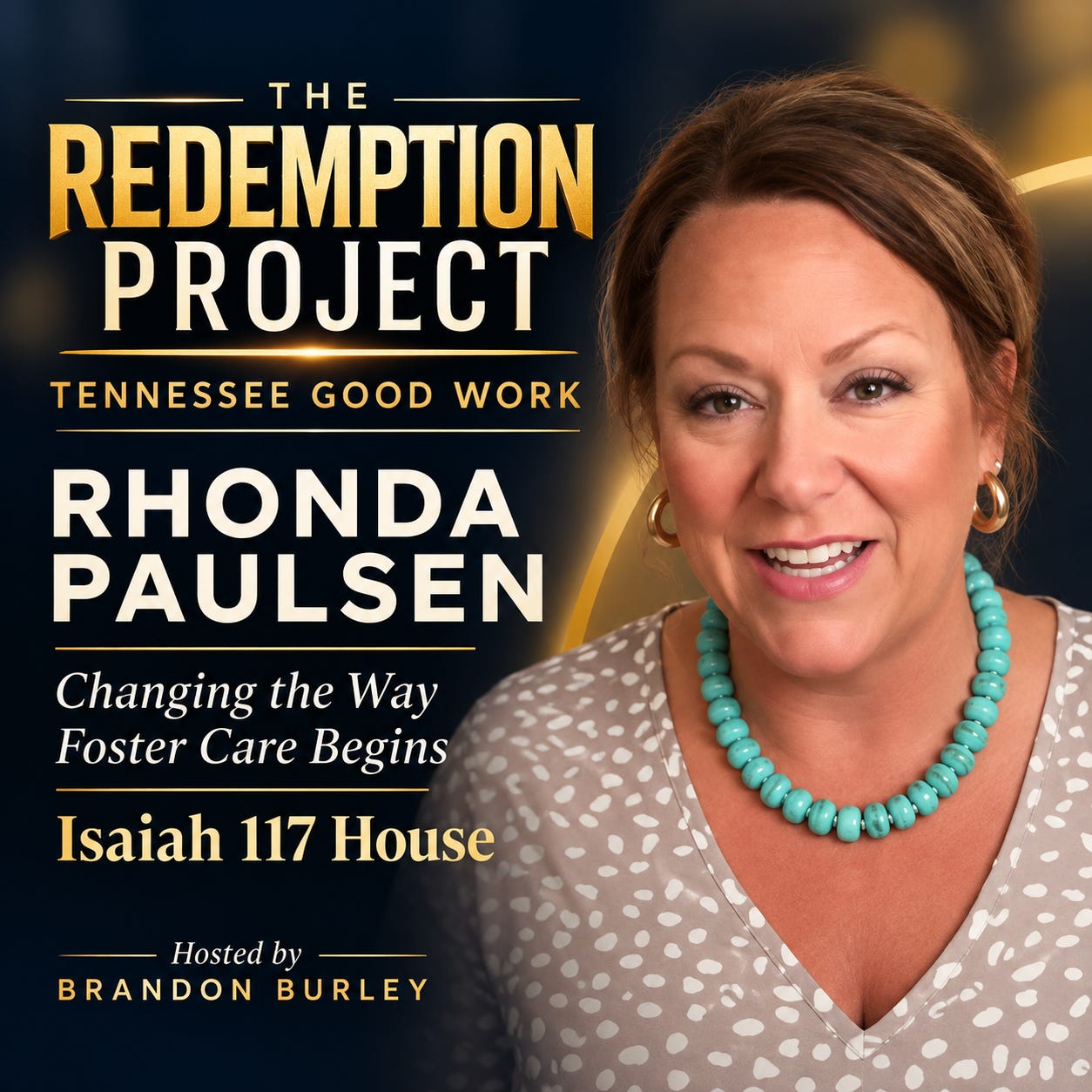
A child can be leaving an unsafe home and still be losing everything familiar. That is the tension Rhonda Paulsen asks us to understand before we talk about foster care.
Rhonda joined me on The Redemption Project to explain how Isaiah 117 House grew from her family’s experience as foster parents—and why the hours between removal and placement deserve more attention.
Safety does not cancel grief
Before entering the foster-care world, Rhonda says she thought removal meant a child would be safe, clean, and back in school. Learning to see that day through a child’s eyes changed her understanding. Parents, siblings, pets, possessions, teachers, and home can all disappear from everyday life at once.
A child may then wait in an office while adults search for a placement. Rhonda is careful not to blame caseworkers. Her argument is that they need practical support, too. The child’s distress and the worker’s effort can both be real.
A home that says, “We’ve been waiting for you”
Isaiah 117 House focuses on that transition. Rhonda describes a welcoming home with meals, showers, new clothes, and space to play while a placement is arranged. The goal is to give children choices and attention at a moment when much of their control has disappeared.
She describes the message this way: a child’s needs are not a burden. Sometimes that means finding a favorite meal. Sometimes it means letting a child choose clothes or spend time outside. These are ordinary acts of care placed inside an extraordinary day.
The work also reaches the foster family. Instead of sending a child into a household scrambling for beds, clothing, and supplies, the organization tries to provide what that family needs for the transition. When possible, foster parents meet the child at the house, joining an activity before leaving together.
From The Redemption Project · Our own course
Good intentions still need careful thinking. Explore Evidence Before Conclusions, Brandon Burley’s online course, and bring a more deliberate approach to the claims and conclusions you encounter.
Explore Evidence Before Conclusions →
This is a promotion for our own product, separate from Isaiah 117 House.
Caring for the people who care
We also discuss the emotional weight carried by volunteers, employees, and caseworkers. Rhonda describes counseling support for employees and opportunities for volunteers to process difficult experiences. Compassion does not make someone immune to secondary trauma.
That matters because a reliable welcome depends on people who can keep showing up. Supporting the adults is part of supporting the children.
You do not have to do everything to do something
Rhonda does not suggest that everyone should become a foster parent. She does ask listeners to consider a concrete next step: learn about fostering, support a foster family, bring a meal, explore appropriate volunteer opportunities, or help an organization serving children.
For listeners who want to learn about Isaiah 117 House, the organization’s website lists locations and ways to get involved. Local needs and volunteer requirements should be confirmed directly with the relevant team.
Learn about Isaiah 117 House and find a location →
Listen to the full conversation above. Then consider one practical question: what could you do to make a difficult transition less lonely for a child or family near you?
Content note: Discussion of family separation, foster care, and childhood trauma. Recorded September 11, 2026. Organizational details reflect the conversation at the time of recording.
I am a retired detective and criminal justice / government educator based in Tennessee. I founded The Redemption Project, as a place to focus on civics, rebuild non-partisan trust, and provide educational and emotional grace while learning about the news. I also have a column in Knox TN Today. My reporting and commentary have also appeared in other outlets including; Governing, The Arizona Capitol Times, South Florida Sun Sentinel, Police1, among other state and regional outlets.


