


When Ashley Cantrell turned herself in to the Murray County Jail in Georgia, she had spent approximately three months avoiding arrest. She was tired of looking over her shoulder, tired of wondering when the police would catch up with her, and increasingly tired of the life she was living.
She served 15 days in jail for what she recalled as a probation violation. During that time, a group of women visited the jail to talk about Jesus Christ. Something about their presence and the way they spoke caught her attention.
“Man, I want what they have,” Cantrell remembered thinking.
She accepted Jesus Christ into her life during that incarceration. But when she was released, she returned to the same environment and continued using drugs for approximately another year.
That part of her story deserves attention because it challenges one of the assumptions people sometimes make about addiction, faith, and recovery.
Recognizing that your life needs to change is not always the same as knowing how to change it.
For Cantrell, the decision to pursue something better came before she had the circumstances, support, and stability to make that decision a lasting reality.
When addiction becomes normal
Cantrell first experimented with methamphetamine when she was approximately 14 years old, around 2000. At the time, she described it as something she did with friends.
It was not initially something she recognized as the beginning of a long struggle.
She also grew up in a family where drug use was familiar. During our conversation, Cantrell explained that she had used drugs with her parents when she was a teenager.
That detail helps explain the environment in which her addiction developed.
When drug use becomes part of someone’s home life, the distinction between normal behavior and dangerous behavior can become difficult to recognize, particularly for a child.
Cantrell had already begun engaging in theft as a young student, stealing items from school lockers. As she grew older, those behaviors became more serious, and methamphetamine increasingly became part of her daily life.
She also described experiencing periods of depression in which she would sleep for 15 to 20 hours a day. Methamphetamine became a way to stay awake, although its use ultimately contributed to a much larger pattern of instability.
She became a mother at 20 and continued working while using drugs. From the outside, she believed many people could not tell she was using methamphetamine.
But maintaining employment or appearing functional does not necessarily mean an addiction is under control.
By approximately age 23, Cantrell had begun injecting methamphetamine. During one particularly difficult period, while her son was spending the summer with her brother and grandfather, her behavior deteriorated.
She described breaking into homes, stealing, and exchanging sex for money to obtain drugs.
Those decisions carried consequences for other people as well as herself. Cantrell does not attempt to hide that part of her history.
She also encountered the criminal justice system repeatedly, including arrests and periods of probation.
Her experience illustrates something important about addiction: a person can recognize that their behavior is destructive and still struggle to separate themselves from it.
When the lifestyle becomes the prison
After years of methamphetamine use, Cantrell began questioning the life that had become familiar to her.
She recalled sitting with people who were using drugs and wondering why they were spending their time doing something that no longer brought her any satisfaction.
She even remembered dumping methamphetamine onto the floor and telling others that she no longer cared about it.
But she kept returning.
It was not simply a matter of wanting another high. The people she knew, the places she visited, and the routines she followed were closely connected to her addiction.
Eventually, even the prospect of continuing that lifestyle became exhausting.
When she finally turned herself in to the authorities, she was not describing a moment of sudden happiness or confidence. She was describing exhaustion.
She wanted something different, even if she was not yet sure how to obtain it.
Her time in jail brought her into contact with women who shared their Christian faith. Their example offered something she believed was missing from her own life.
But after she was released, she continued to struggle.
That does not necessarily mean her faith was insincere. It means the circumstances that had shaped years of addiction were still present.
The importance of changing your surroundings
One of the most significant moments in Cantrell’s story did not involve an arrest, a courtroom, or a dramatic spiritual experience.
It involved a family member offering her a place to live.
Cantrell explained that someone in her family invited her to move in once that relative had a home of her own. She accepted the opportunity and eventually moved away from the community where she had spent much of her life.
She changed counties, distanced herself from people she associated with drug use, and began rebuilding her routines.
According to Cantrell, that move was a turning point in her recovery.
At the time of our September 2026 interview, she reported approximately 10 years without methamphetamine.
She also described having stopped using marijuana several years earlier and more recently giving up alcohol.
What stands out is how much her recovery depended on changing the daily circumstances of her life.
As a retired detective, I have seen the importance of understanding what happens to people after they leave a jail, complete a program, or decide they want to stop using drugs.
A person can make a sincere commitment to recovery while still returning to a household where drugs are readily available, relationships are unstable, and the same pressures remain.
Personal responsibility is essential, but access to safer housing, healthier relationships, and a supportive community can make it far more practical to act on that responsibility.
Cantrell’s story does not establish that changing environments will work for everyone. Addiction and recovery are more complicated than any single intervention.
But her experience makes the importance of those circumstances difficult to ignore.
Faith became more than a moment
Cantrell’s Christian faith remained central to her life after she left the environment where she had been using drugs.
She described eventually feeling called to be baptized, becoming involved in a local church, and developing a deeper relationship with God.
She also acknowledged that her spiritual growth took time.
Attending church, reading the Bible, and learning to apply her beliefs to everyday decisions were not things she mastered immediately.
Her understanding of faith developed alongside her recovery.
During our conversation, Cantrell described how the people in her church supported her as she worked through painful experiences from her past.
For her, Christianity became something more than the decision she made while sitting in a jail cell.
It became part of how she understood her identity, her responsibilities, and the future she wanted.
That progression is important.
Faith did not remove her need to make difficult decisions. It helped give those decisions meaning.
She still had to change her habits, distance herself from destructive relationships, maintain employment, and take responsibility for her life.
What she describes is not an effortless transformation, but a relationship with Christ that has continued to develop through those choices.
The life she is building today
When I asked Cantrell about her life today, the conversation moved away from the drugs, arrests, and instability of her past.
That was intentional.
I am interested in what people have overcome, but I am equally interested in what they are doing with the opportunities they have now.
Cantrell works for a school system, cleaning and helping maintain a high school. She also cleans houses on weekends and has been pursuing her GED.
She spoke with pride about her work and the satisfaction she receives from doing it well.
She also described volunteering, remaining active in her church, and sharing her experiences with young people.
Some students at the high school where she works know about her history. Cantrell has made the decision to be open about it, including participating in podcast interviews.
She wants young people to understand where decisions involving drugs can lead.
That willingness to discuss her past carries particular significance because it means allowing others to see a chapter of her life that she might once have preferred to hide.
But today, she can speak about those experiences from a different position.
She is no longer telling the story of someone still caught in the same cycle. She is telling the story of someone working to maintain the life she has rebuilt.
And perhaps nowhere is that change more personal than in her relationship with her son.
At the time of our conversation, her son had graduated from high school and was approaching his 21st birthday.
Cantrell was visibly proud of him and the decisions he had made.
She knew what her own life had looked like at his age. Watching him reach adulthood on a different path meant something deeply personal.
The consequences of addiction can extend beyond the person using drugs. So can the benefits of recovery.
For Cantrell, that means being present for her son and continuing to build the stability that was missing during much of her earlier life.
What her story teaches us about redemption
There is an important distinction between being forgiven for something and rebuilding what was damaged.
Forgiveness can happen in a moment. Rebuilding trust, changing habits, and demonstrating accountability often take considerably longer.
Cantrell’s experience reflects that distinction.
She was willing to acknowledge her criminal behavior, the people she had hurt, and the decisions that contributed to her addiction. She also recognized the importance of changing the circumstances that made returning to those behaviors easier.
The outcome was not simply that she stopped using methamphetamine.
She developed new relationships, found a church community, maintained employment, strengthened her connection with her son, and began pursuing educational goals she had not previously completed.
Those are measurable changes in how a person lives.
It is also worth recognizing that recovery is not a competition. Not everyone has a relative who can offer housing. Not everyone finds a supportive community at the same moment they become ready for change. And not everyone experiences recovery through the same religious or personal journey.
Cantrell’s Christian faith is inseparable from how she understands her transformation. Others may find recovery through different combinations of treatment, support, accountability, and personal commitment.
Her experience is her testimony, not a universal formula.
Still, the broader lesson applies well beyond addiction.
People need opportunities to make better choices, and those choices require continued effort long after the initial decision is made.
Today, Cantrell is employed, raising her son, pursuing her education, and sharing the Gospel with people willing to listen.
She has not forgotten the young girl who began using methamphetamine at 14. Nor does she excuse the woman who later stole, broke into homes, and lived a life centered around obtaining drugs.
But she is no longer confined to being that person.
Near the end of our conversation, Cantrell reflected on her appreciation for the life she now has and how different it is from the one she once knew.
For me, that is the part of her story that deserves the greatest attention.
Not the drugs she used or the number of times she went to jail, but the years of work that followed her decision to change.
Redemption is not simply leaving the old life behind. It is taking responsibility for building a different one.
Ashley Cantrell is still doing that work.
And perhaps the question her story leaves us with is this: When someone is ready to change, are we willing to help create the conditions in which that change can last?
Listen to the full conversation
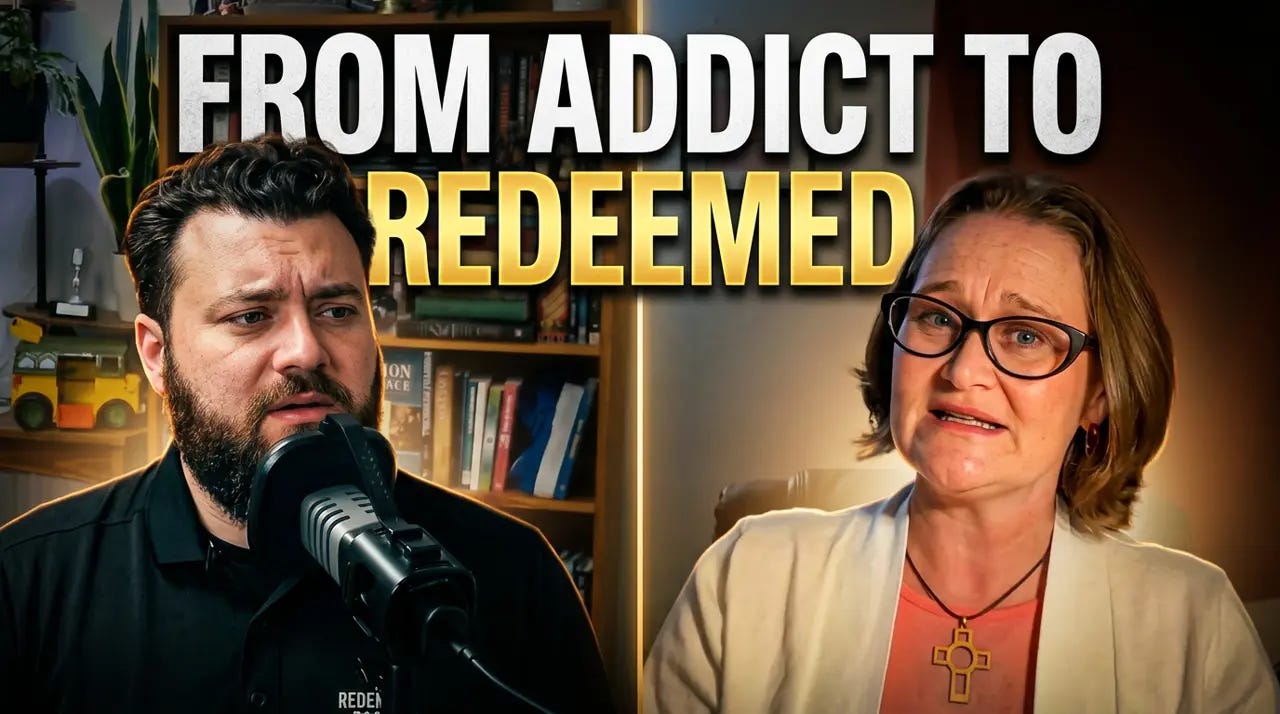
In this episode of The Redemption Project, Ashley Cantrell joins me to share her journey from teenage methamphetamine use and repeated encounters with the criminal justice system to recovery, Christian faith, motherhood, and a renewed sense of purpose.
We discuss the role of family environments in addiction, why getting sober often requires changing more than one behavior, how her faith developed over time, and why she now shares her story with young people.
Listen to or watch the full episode: [Insert podcast episode link or player]
If you or someone you know is struggling with substance use, confidential help and treatment referrals are available through SAMHSA’s National Helpline at 1-800-662-HELP (4357).
The Redemption Project tells stories of faith, accountability, and second chances. We believe that understanding where someone has been matters, but understanding what they have done to change matters just as much.
Subscribe to The Redemption Project for more conversations about the people, choices, and communities that make redemption possible.
I am a retired detective and criminal justice / government educator based in Tennessee. I founded The Redemption Project, as a place to focus on civics, rebuild non-partisan trust, and provide educational and emotional grace while learning about the news. I also have a column in Knox TN Today. My reporting and commentary have also appeared in other outlets including; Governing, The Arizona Capitol Times, South Florida Sun Sentinel, Police1, among other state and regional outlets.


