



Commentary
By Brandon Burley
The Redemption Project Newsroom
Tennessee has several child-related controversies moving at once.
One involves seriously sick immigrant children enrolled in a state health program. Another involves federal civil-rights complaints accusing the Tennessee Department of Children’s Services of failures involving children with disabilities, placements, removals, records and family rights. Others involve broader litigation and federal scrutiny around Tennessee’s foster-care and juvenile-justice systems.
They are separate cases, with different agencies, statutes and legal questions.
But they raise a shared public concern: whether Tennessee’s child-serving systems can provide care, process and accountability when the stakes are highest.
It is easy to sort the stories by category.
Immigrant children. Foster children. Disabled children. Children in state custody. Children in health programs. Children whose parents are accused of neglect. Children in facilities. Children in court.
That is how systems sort people.
It is not how the public should think about them first.
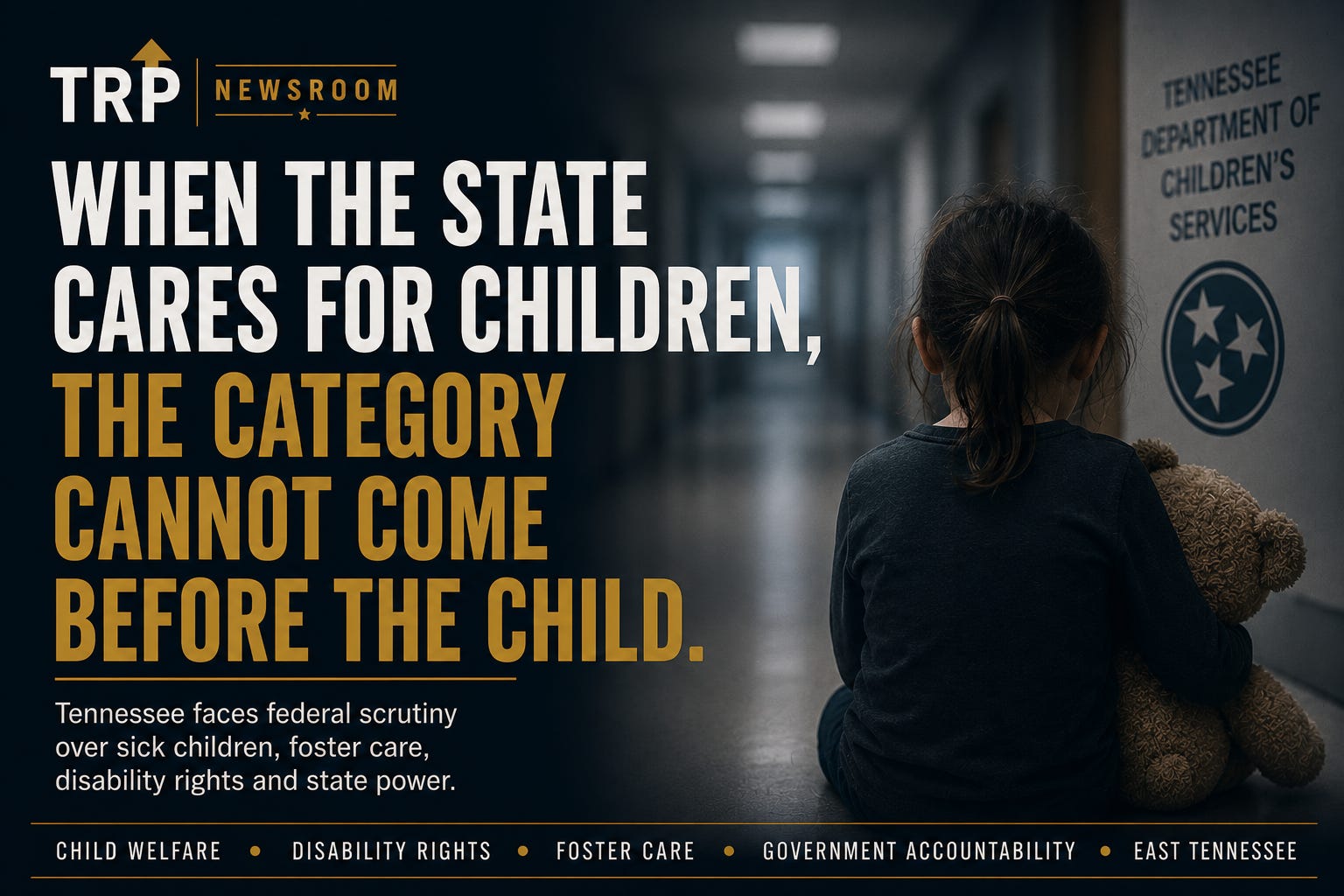
Before the category, there is the child.
That is the point Tennessee needs to sit with.
This is not a legal-versus-illegal story. It is not a partisan story. It cannot be reduced to one lawmaker, one lawsuit, one agency letter or one court order.
It is a care story.
And care is one of the hardest tests of government.
Government is not the family. It is not the church. It is not the neighbor, the doctor or the foster parent sitting at a kitchen table trying to calm a child after a placement move.
But government still has duties.
