


by Brandon Burley of The Redemption Project
Most people spend very little time thinking about what happens inside a county jail on an ordinary Friday night.
Outside, life continues normally. Traffic moves. Families eat dinner. Stores close. Phones ring.
Inside, time feels different.
For one hour each week in Champaign County, a small group of women enters that space carrying Bibles, simple lesson plans, and enough patience to meet people where they are without assuming instant change.
Susan Stoner is one of them.
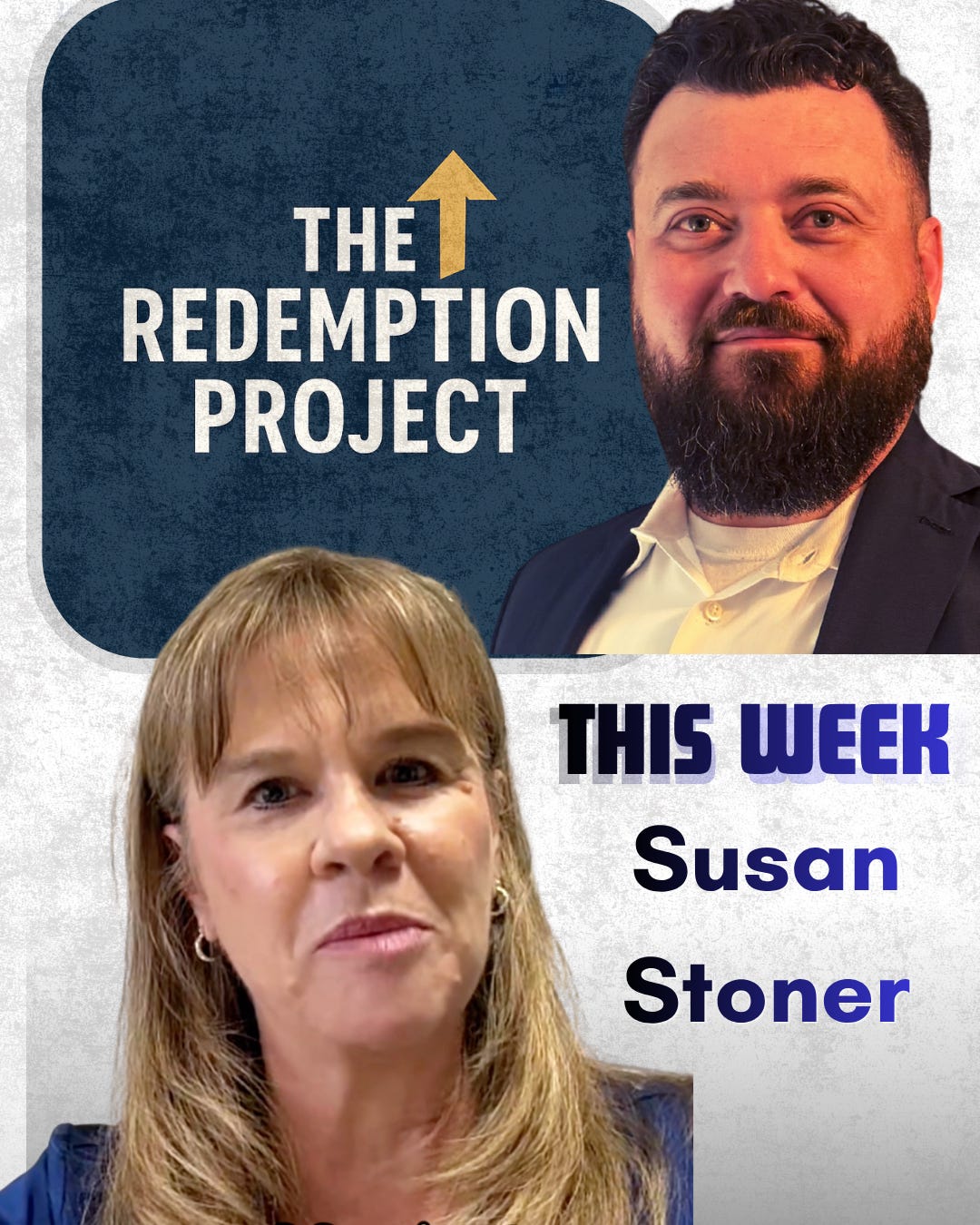
She is part of a ministry connected to Jesus Is the Way, a Christian outreach based in central Illinois that includes several different programs, one of which sends volunteers into the women’s section of the county jail every Friday.
There is no graduation date.
No ten-week curriculum.
No fixed ending point.
The women come in two at a time, lead worship, teach scripture, pray, and return the following week to whoever is still there and whoever has newly arrived.
That rhythm matters because county jail is not a stable population.
Some women are there briefly.
Some remain much longer.
Some begin cautiously.
Others engage immediately.
And many arrive carrying far more than the criminal charge that brought them through the door.
Susan said one of the clearest things she has learned over the past year is that even in a jail setting, small changes become visible quickly when people begin paying attention to one another.
She described women helping each other find scripture in a Bible.
One inmate becoming emotional while speaking and another reaching over quietly to comfort her.
Someone struggling to locate a passage while another immediately helps without being asked.
Those moments are small by themselves.
Inside a jail, they are not insignificant.
Because correctional systems often see behavior first: classification, compliance, movement, discipline.
Volunteers often see something else first: whether someone is beginning to soften enough to trust another person in the room.
That does not mean every person responds the same way.
Susan said some women immediately lean in because they have never encountered this kind of attention before.
Others remain cautious, watching carefully before deciding whether they want to participate at all.
And some simply sit back, unsure whether they believe any of it yet.
That is expected.
Jail ministry rarely works through instant visible transformation.
More often, it works through repetition.
A familiar volunteer.
A repeated invitation.
A room that feels briefly different from the rest of confinement.
One of the strongest moments she described involved a woman incarcerated only recently who, during that single hour, openly gave her life to Christ.
The response from outside the jail followed just as quickly.
The woman had limited vision and could not read the available Bible easily.
Within minutes of hearing that, Susan’s son sent money so a larger-print Bible could be purchased for her.
That detail stayed with her because it reflected something she sees often: when people become invested in helping, practical needs appear immediately and quietly get solved.
Not everything she described was dramatic.
In fact, some of what seemed most meaningful was ordinary.
A conversation becoming deeper than expected.
A planned lesson getting interrupted because inmates begin talking honestly enough that the teaching outline no longer matters.
She said one recent session never reached the second half of the prepared message because the women themselves were carrying the hour through conversation.
For her, that was not failure.
That was evidence they wanted to be there.
And willingness matters more than polished delivery.
County jail ministry often depends on trust built under unusual conditions.
The volunteers enter a secured room.
Correctional officers bring inmates in, close the door, and remain available if needed.
Susan said the routine has become almost mechanical in how smoothly it operates: same room, same hour, same structure.
She has never had to use the emergency buzzer.
She says she feels safe there.
That safety matters because she understands fear more personally than many volunteers realize.
Years earlier, she and her husband were robbed at gunpoint while taking trash out behind the fast-food restaurant where they worked.
Two men approached unexpectedly, intending to force entry into the business.
She broke free and ran inside to call police, only realizing afterward that she had left her husband outside with the armed offenders when the door locked behind her.
The offenders were never identified.
The event stayed with her for years.
She described the long aftermath plainly: fear of being home alone, fear when her husband worked nights, fear that did not disappear simply because the immediate event ended.
That history makes her current work notable.
Because many people who have experienced violent crime understandably avoid placing themselves near incarcerated offenders voluntarily.
She did the opposite.
Not because she dismisses what happened, but because over time her central question became one she never fully lost: why do people end up here, and what happens if nobody enters that space trying to help them leave differently than they came in?
That question also shapes how Jesus Is the Way operates beyond one hour in jail.
The ministry attempts to maintain contact when possible after release, connecting women to church, to continued support, and to leaders who can follow them once incarceration ends.
That continuity is often where many systems fail.
Jail itself can impose structure.
Release removes it instantly.
And many people who leave confinement are overwhelmed not by freedom itself, but by how little structure remains once the door opens.
That is one reason Susan believes even one hour matters.
Because what happens in that room may not end there.
One person returns to a cell and talks to another person who never attended.
Someone skeptical returns the following week anyway.
Someone newly incarcerated arrives because another inmate said it was worth going.
That is how influence spreads in correctional environments: slowly, sideways, often invisibly at first.
For Susan, the goal is not dramatic outcomes every week.
It is simpler than that.
Help one person if possible.
Trust that what begins there may continue elsewhere.
And understand that even inside a jail, people still respond when they are treated like they remain worth speaking to.
That may be easy to say from outside.
Inside, it often matters more than people realize.