



The Redemption Project Newsroom
The gasoline flowing into a Tennessee vehicle probably did not come from Iran.
It may have been refined in Memphis. It may have moved north from the Gulf Coast through a major pipeline. The crude oil may have come from Oklahoma, Texas or another domestic source.
But the price attached to that gallon traveled much farther.
That is how conflict in the Middle East reaches Tennessee gas pumps.
It does not usually arrive first as a physical shortage.
It arrives as a price signal.
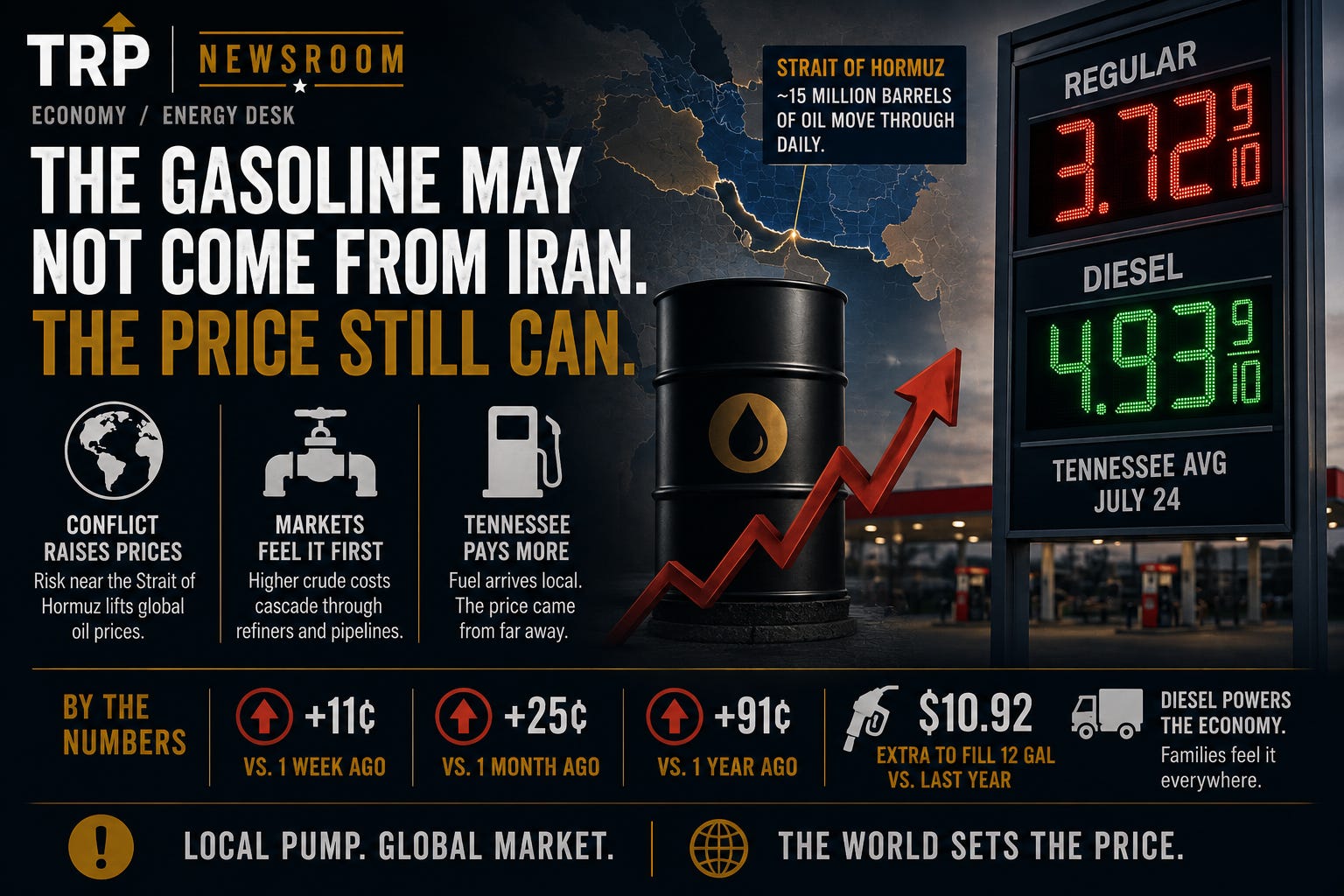
When fighting threatens oil production or shipping near the Strait of Hormuz, buyers around the world begin competing for replacement crude oil and fuel. Global benchmark prices rise. Gulf Coast gasoline and diesel become more valuable. Tennessee terminals receive more expensive fuel. Tanker trucks carry that fuel to local stations. Then the numbers change on the roadside sign.
The gallon is local by the time a driver buys it.
The market never was.
AAA listed Tennessee’s average price for regular gasoline at about $3.72 per gallon on July 24. Diesel averaged about $4.93. Tennessee remained below the national average, but regular gasoline had risen roughly 11 cents in a week, 25 cents in a month and about 91 cents compared with one year earlier.

