



The Redemption Project Newsroom
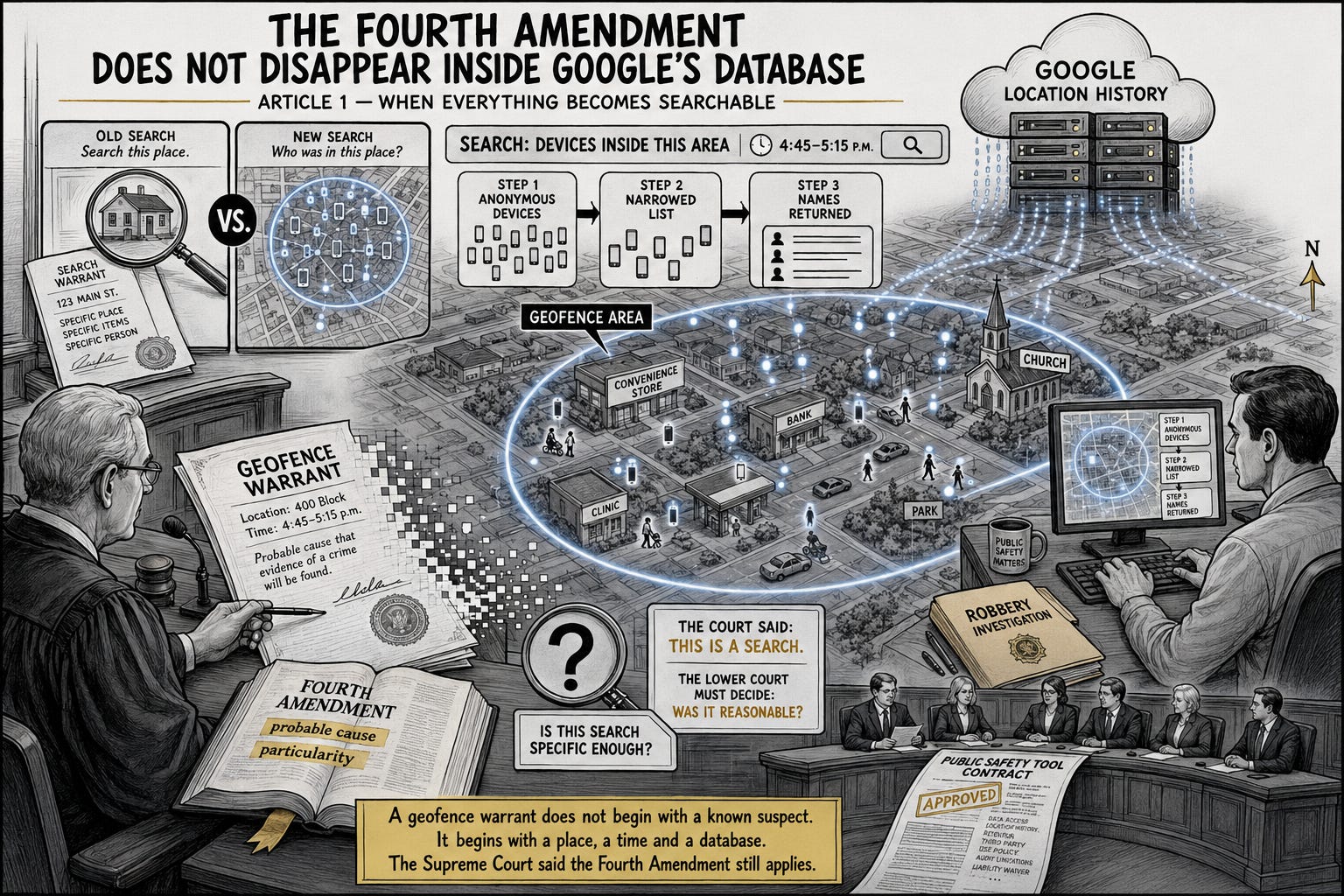
A police officer once needed a suspect, a place or a thing to search.
A house. A car. A phone. A person. A known account. A specific address.
Digital policing has changed that order.
In some modern investigations, police can begin not with a suspect, but with a location and a time. They can ask a technology company which devices were nearby, then work backward from the data toward a person.
That is the basic idea behind a geofence warrant.
It is also why the U.S. Supreme Court’s ruling in Chatrie v. United States matters far beyond one robbery case in Virginia.
The Court ruled Monday that police conduct a Fourth Amendment search when they obtain Google Location History through a geofence warrant. The decision does not ban geofence warrants. It does not decide whether the evidence against Okello Chatrie must be suppressed. It does not answer every question about digital policing.
But it does answer one important threshold question: the Fourth Amendment is not avoided simply because police obtain sensitive location information from a private company instead of directly from a person.
That is the first principle in this series.
