
By Brandon Burley
The Redemption Project | Redemption Story of the Week
Scarlett was outside the hospital with nowhere to go.
She had survived an overdose. She was still weak after a severe health crisis. In our conversation, she described leaning against the hospital building, uncertain what would happen next.
Then her papaw arrived.
She had not known he was coming. She also knew she had hurt him, just as she had hurt other people who loved her. He came anyway.
He offered her a place to recover. There would be meals, prayer and someone who wanted her to live. There would also be rules.
“He showed up for me with open arms, with rules,” she said.
That is where Scarlett places a turning point in her story. What followed took months of care and years of work.
Before the crisis
Scarlett describes herself as a quiet student who played sports and earned good grades. She married young, became a mother and bought a home. Addiction was not the future she imagined.
After her second daughter was born, she developed persistent stomach problems. She says a long search for answers eventually led to a Crohn’s disease diagnosis and, late in 2017, a referral to a pain clinic.
At the same time, her marriage was struggling and she was grieving a family death. She began misusing prescribed pain medication, then sought pills elsewhere. Her account describes a progression to heroin and five years in active addiction.
The consequences reached her children. She signed emergency custody over to her mother. The home was sold. Relationships deteriorated. She made several attempts at rehabilitation, but recovery did not hold.
Scarlett does not leave those losses out of her testimony. Rebuilding the relationships would eventually require facing what had happened to them.
Surviving did not settle everything
By the summer of 2022, Scarlett says she was severely underweight and had lost the ability to walk. Her account includes bowel blockages, hospital stays, malnutrition and being told she might die.
Her thoughts turned to her daughters. She wanted them to know she loved them. She also wanted them to understand that her addiction was not their fault.
Even after that health crisis, she returned to heroin and overdosed. She describes emergency treatment and another hospital discharge before the moment her grandfather came to get her.
The danger had been real. So had the difficulty of changing. Her story does not become understandable by assuming that one frightening experience should have made everything easy afterward.
A home with boundaries
At her papaw’s house, care became practical.
He cooked breakfast, lunch and dinner. He prayed for her. Phone access was limited. There were expectations about staying at the house and following its routines. She had to make her bed.
Scarlett says she was angry about the restrictions at first. Looking back, she describes his help as the best thing that happened to her.
Faith also became personal in a different way. She had grown up in church, but remembers kneeling beside the bed when her stomach problems returned and praying:
“Lord, I’m gonna do it your way, ’cause my way’s killing me.”
This time, she called her father for help. He took her to the hospital. She says she was admitted and underwent surgery for a bowel blockage. Her mother and other relatives came to see her.
Afterward, she returned to her grandfather’s home to recover. She began walking better and noticing ordinary changes in herself: wanting to wash dishes, pick up after herself and participate in daily life.
Her account holds faith and practical care together. It includes medical treatment, a stable place to recover and therapy she began while living with her papaw. She continued therapy for roughly two and a half years.
Learning to be present again
After about four months, Scarlett wanted to move back into her mother’s home, where her children were living.
“I’m ready to be a mom again,” she remembers saying.
Being under the same roof brought joy. It also exposed how much she had missed. She did not know the everyday details of her daughters’ lives, including their favorite foods.
Being home was a beginning. It did not automatically restore trust.
“Trust isn’t, it’s not built back overnight,” she said.
That part of the story matters. A family can welcome someone back and still need time. A parent can be committed to recovery and still have relationships to repair. Scarlett describes trying, continuing therapy and learning how to be present.
Four years later
Scarlett celebrated four years sober in July 2026. She says she now has full custody of her children and works full time for an employer she had worked for before addiction.
She is also sharing her experience in jails, recovery settings and schools. Returning to Clinton High School, where she graduated, was especially meaningful. She has spoken at Susannah’s House in Knoxville, where the presence of mothers and their children connected closely with her own experience.
Her life is still being built. She talks about wanting a place of her own and the cost of getting there. Four years sober does not mean every difficulty has disappeared.
It means the story continued.
When her grandfather arrived outside that hospital, he could offer a home and his presence. Scarlett would still have to take part in the work that followed. Today, she can tell other people what that work made possible: being a mother again, returning to employment and finding a purpose in sharing her experience.
The woman who once stood outside with nowhere to go is now standing in front of other people, telling them there can be a way forward.
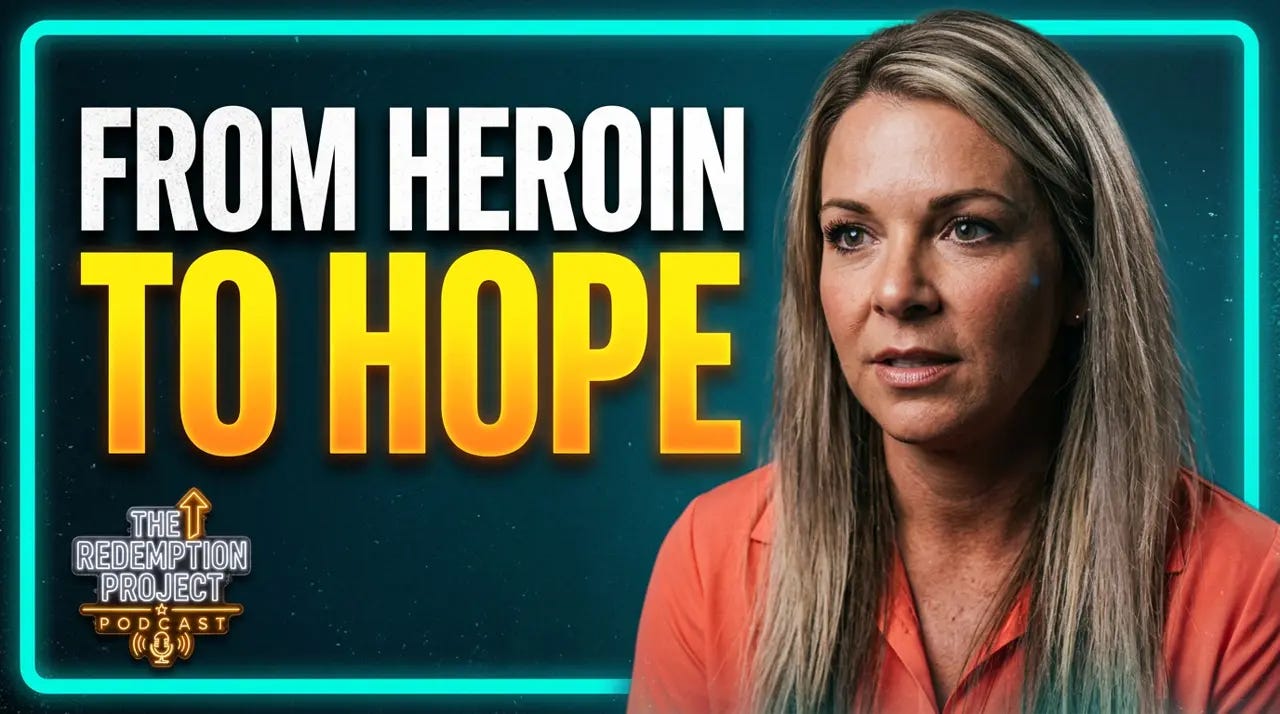
Hear Scarlett’s full conversation
Scarlett’s episode of The Redemption Project Podcast releases Friday, October 30, 2026, at 5 p.m. Eastern on YouTube, Spotify, Apple Podcasts and the TRP website.
Subscribe to The Redemption Project Newsroom on Substack for automatic updates when new stories and episodes are published.
This story is based on Scarlett’s account in her interview with Brandon Burley. Her medical history and recovery experiences are presented as she described them.