



By Public Safety Desk
The Redemption Project Newsroom
A federal proposal to restrict the use of automated license plate readers is drawing opposition from a Southern police association and reopening a broader debate over public safety technology, privacy and local control.
The Southern States Police Benevolent Association is urging members and supporters to contact Congress in opposition to a proposal that would condition federal highway funding and grants on limits to automated license plate reader technology.
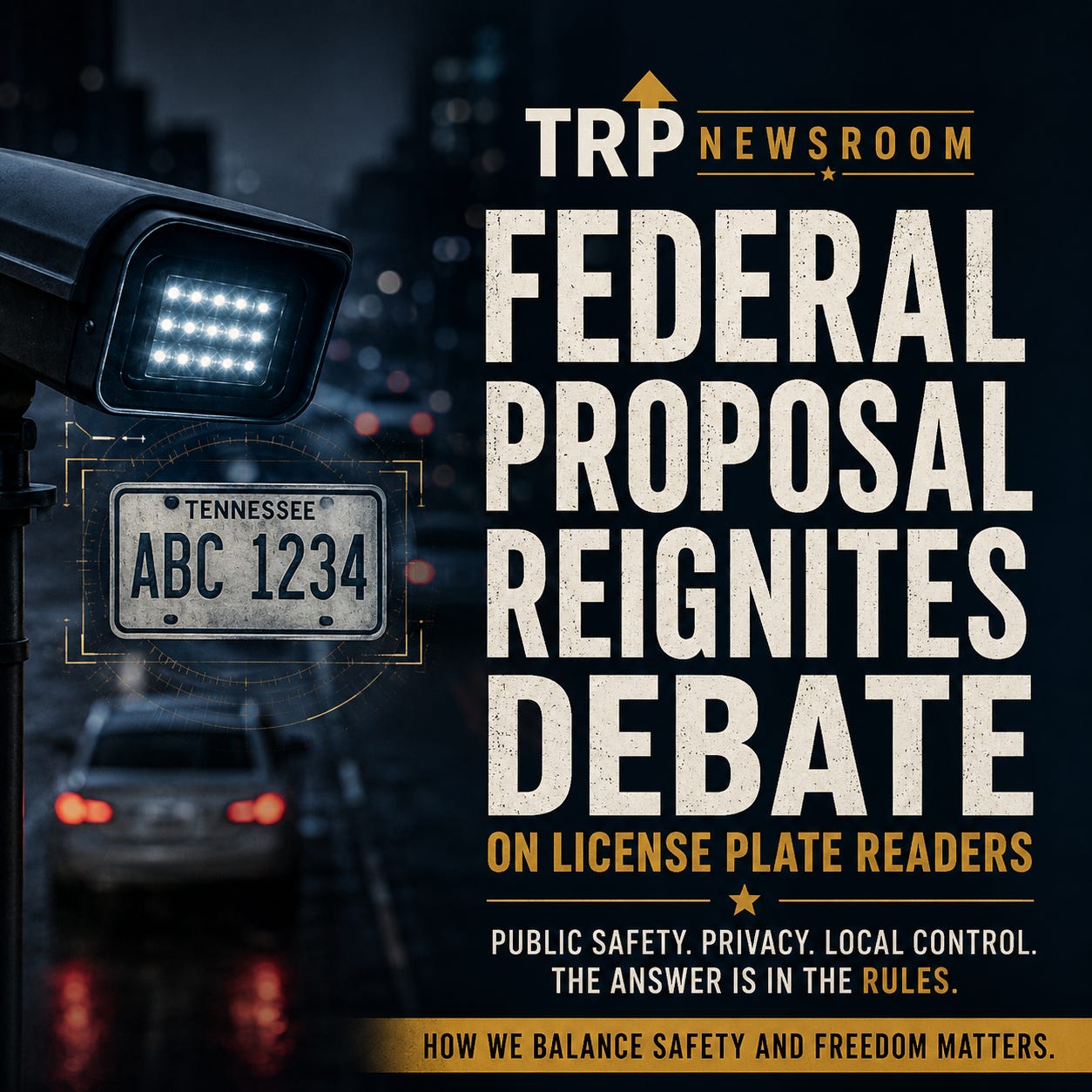
The association’s campaign specifically names an amendment from U.S. Reps. Scott Perry, R-Pa., and Jesús “Chuy” García, D-Ill., that would restrict the use of automatic license plate readers except for tolling purposes.
Automated license plate readers, often called ALPRs or LPRs, use cameras and software to capture license plate numbers, vehicle images, locations and times. Police agencies use the systems to compare plates against law enforcement databases and generate alerts connected to stolen vehicles, wanted persons, missing people or vehicles linked to criminal investigations.
SSPBA says the technology helps law enforcement locate missing children and vulnerable adults, recover stolen vehicles, identify suspects in violent crimes, locate wanted fugitives and support investigations into human trafficking, narcotics trafficking and organized crime.
Paid subscribers receive early access to every article because their support helps make this work possible. That said, I believe civic knowledge should remain accessible, so this article will unlock for all readers in 24 hours. If you’d like immediate access — and want to support independent, systems-focused journalism — consider becoming a paid subscriber.
